Strongly disagree. If you're relying on Python garbage collection to free file descriptors in a loop, you have a subtle bug that will rear its head in unexpected and painful ways (and by some unwritten law of software, most notably either at 3 AM or when you have an important demo scheduled). This is true whether you're running in CPython or PyPy. It's not hard to avoid - use `with` or `try...finally`. It's not some newfangled language feature. It's not a surprise - you can't write good RAAI code in Python. It's a sign of someone with a poor grasp of the language they're using. If you find things like this, you should fix them, even if you never intend to use PyPy.
Odd complaint but interesting list of about:config options! I must be in the tiny minority that has actually _used_ all of these right-click menu items at one time or another.
That one's been there since the very early days of Netscape Navigator. It's been a few decades since I last clicked on it, but that's mostly because I haven't set my desktop wallpaper in a few decades and I suspect using that isn't too rare for the people who do set wallpaper?
I don't have that option on Linux, but then my desktop background is being drawn by feh launched from .xinitrc. It probably works on Gnome or whatever.
This is reminding us something that we should never have forgotten - modern war has an insatiable demand for munitions.
To take just one example out of dozens, the US fired somewhere from 100 to 150 THAAD interceptors - about ¼ of the stockpile - during the 12 days war in 2025. We produce just under 100 per year. There are plans to raise that number to 400 per year.
The Ukrainians were expending somewhere around 10,000 drones per day in mid 2025. Russian numbers are likely broadly similar.
Many historical conflicts have featured a substantial bottleneck on multiple munitions during ramp up. World War 1 had artillery shell crises across Britain, France, Russia, and Germany. World War II had similar, especially for the Russians and Germans. The US was short on ammo early in the Korean war.
Modern mechanized combat demands an insane manufacturing and logistics chain. It can burn through stockpiles incredibly fast, especially of high capability expensive munitions. War production levels are utterly unsustainable during peace time.
This is why peer and near-peer conflict is as much an economic and productive game as it is a military one. Shock and awe takes a tremendous amount of resources to accomplish at all, let alone sustain.
Your whole comment I kept recalling "The Art of War" - which is of course, mostly about how not to go to war, how if you must go to war, it needs to be efficient, bc the war will decimate the State faster than the enemy ever could, but be really smart about it, bc not only is it incredibly expensive, you could also lose, and its very hard to recover from.
Best to avoid warring if you at all can - thousands of years later, still true.
That's why decapitation attacks can be very efficient, as wars are actually just extra-election elite changes since regular people minding their own business don't actually intend to kill some other group of people even if they are outrage and propaganda filled.
The problem is, those decapitation attacks work when the institutions are weak or structured in a way that all the power is in the hands of one person. It's always funny to watch in Hollywood movies everybody scrambled to save the US president and the US president being extremeyly important. Even in real life Americans swear in a replacement ASAP when the president dies (i.e. Kennedy). That's very funny from European perspective, RIP to the guy but just elect someone else why you are making it a big deal?
Also, the wars in Europe all have stories about how soldiers pausing the fight one the frontlines and having a chat sharing meals exchanging cigarettes with the opponent etc.
>US fired somewhere from 100 to 150 THAAD interceptors - about ¼ of the stockpile - during the 12 days war in 2025. We produce just under 100 per year.
Just a reminder that THAAD interceptor price is not due to material cost or difficulty to manufacture. Its approximately as expensive as gold per kilogram precisely because its made in such small numbers as part of a gold plated military contract.
It’s been over 100 years since the exchange was closed for war. They might open it for manual trading if algorithmic (80% of volume) is attacked. I bet we would never get attribution and that the US admin benefits by saying any damage must be Iran.
Trying a little experiment. Here's the same comment as above, but I asked Claude to research my claims and add web citations. Any errors in content are my own - I originally wrote the comment with no AI assistance and only brief web searching to check my numbers.
---
This is reminding us something that we should never have forgotten - modern war has an insatiable demand for munitions.
To take just one example out of dozens, the US fired somewhere from 100 to 150 THAAD interceptors - about ¼ of the stockpile - during the 12 days war in 2025.[1][2] We produce just under 100 per year.[3] There are plans to raise that number to 400 per year.[4]
The Ukrainians were expending somewhere around 10,000 drones per day in mid 2025.[5] Russian numbers are likely broadly similar.
Many historical conflicts have featured a substantial bottleneck on multiple munitions during ramp up. World War 1 had artillery shell crises across Britain, France, Russia, and Germany.[6][7] World War II had similar, especially for the Russians and Germans.[8] The US was short on ammo early in the Korean war.[9][10]
Modern mechanized combat demands an insane manufacturing and logistics chain. It can burn through stockpiles incredibly fast, especially of high capability expensive munitions. War production levels are utterly unsustainable during peace time.
This is why peer and near-peer conflict is as much an economic and productive game as it is a military one. Shock and awe takes a tremendous amount of resources to accomplish at all, let alone sustain.
Short term squeeze, because building capacity takes time and real funding. The component manufacturers have been here before. Booms rarely last long enough to justify a build-out. If AI demand turns out to be sustained, the market will eventually adapt by building supply, and prices will drop. If AI demand turns out to be transient, demand will drop, and prices will drop.
I'd really like to see a more centrist progressive in the White House in 2028. American politics is a pendulum. We should hope to dampen its amplitude, not intensify it. If we swing that far left, we'll swing even further right in 2032 or 2036.
This is the problem with a 2-party system. There's an implicit bias that the truth is democratically in the middle. But in this case, the right wing doesn't know how to solve its own problems.
The US right wing doesn't do "middle class". It does tax cuts for the rich and hunger games for the rest. If you pander to them, things will just get worse and the far right will surge even more ... which is probably what they want.
Sure, but that's the straw-man version of the argument. During COVID, there was aggressive censorship of _everything_ related to the virus that didn't exactly toe the party line. Satire, comedy, and truly live questions (like the weak version of the lab leak hypothesis, that SARS-CoV-2 accidentally escaped from a lab into human population) were censored alongside the obviously false, harmful, and misleading takes about drinking bleach and Ivermectin.
Both science and democracy require active conversation that permits dissenting viewpoints and challenges to the accepted wisdom. Once we have an organization deciding what "the truth" is, we're doomed to stagnation and extremely vulnerable to organizational capture by self-motivated people.
In other words, once you build the political, legal, and technical machinery of censorship, you're half way to having it co-opted by people with anti-social intents.
Weird, cause I remember there being a very lengthy and involved debate about COVID. I remember hearing a ton of dissent and disagreement with the government positions... almost like... they weren't being censored. There are hundreds of thousands of discussions about the lab leak hypothesis, and there were hundreds of those discussions at the time. There was also plenty of conflicting advice given, including "injecting bleach" which was advice given by the then president, and ivermectin, which was advice given by 100s of online podcasters.
Even today, you can find like, hundreds of articles of dissenting opinions that were posted at the time of covid. In fact, no one quite yelled "I'm being silenced" as loudly as covid deniers who were demanding to share untested hypotheses.
What I can't find, is any articles that were pulled-from-the-air for going against the then-administration's opinions. But if you have them, please share. Importantly, they need to not be pulled for "false, harmful, or misleading takes."
Certainly at the beginning, the tools weren't 100% in place, at least in the west. Famously, China silenced one of the very first COVID reporters and forced him to recant, before he himself died from the virus.[1]
As the pandemic wore on, we began to see a fight over "fact-checking". Mostly, it played out on Facebook and YouTube, not in traditional media. At the height, I saw a lot of channels self-censoring by avoiding any mention of the words "COVID", "virus", "coronavirus" etc to avoid the AI bot that would capriciously ban or demonetize their videos because it clocked them as COVID misinformation, even when they weren't primarily talking about the virus or proposing any sort of false, harmful, or misleading takes. Many channels do similar today, saying "PDF files" instead of pedophiles or "SA" / "Sea Ess Eh Em" instead of "sexual assault" or "kiddy porn" while talking about the Epstein files. Or everyone's favorite, "unalive" or "self-delete" instead of "dead"/"kill" or "suicide".
I don't have a good source for most of that handy - I just remember living through it. I'm sorry, I know anecdotes aren't data!
Yeah, I mean, the thing is, I also lived through it, and you and I remember it differently. Which is why I asked for clear examples, because it's easy to go back and forth about anecdotes.
> once you build the political, legal, and technical machinery of censorship, you're half way to having it co-opted
Indeed, my original post ("Both political parties have tried to silence dissenting views") was simply about censorship being bad no matter which political party does it. I hate that the current administration is doing it. I hated it when the prior administration did it. If we can't acknowledge that both parties did it, then when the parties switch again, there will still be secret soft censorship happening. It's a moral hazard to reflexively discount when a side I may agree with does something wrong.
It's getting increasingly harder to point out when both parties are wrong without people assuming it's a back-handed defense of the other party.
> "The United States government pressured Twitter to elevate certain content and suppress other content about Covid-19 and the pandemic... Take, for example, Martin Kulldorff, an epidemiologist at Harvard Medical School. Dr. Kulldorff often tweeted views at odds with U.S. public health authorities ... Kulldorff’s statement was an expert’s opinion—one that happened to be in line with vaccine policies in numerous other countries. Yet it was deemed “false information” by Twitter moderators merely because it differed from CDC guidelines."
"Pressured." They merely suggested that it was better for the country and for business, and most of the companies agreed. There were no threats of fines or lawsuits, and none were levied.
Weren't there huge monopoly cases being furthered against Meta, Twitter and TikTok at that time? And more action against other major tech companies
If I'm threatening you over your 'possible' monopoly with one hand, and 'politely' asking you to censor millions of stories with the other - are those things completely unrelated? Or is there possible an implied message there?
A mafioso will never tell you straight-up that they're threatening and extorting you. But if you look between the lines even a little bit you can discern the message.
(Sometimes the person delivering that message isn't even aware of the threat they're sending; afaik it's entirely possible that Lina Khan was completely genuine with her push.)
> and none were levied.
Well everyone did what they were 'politely asked', didn't they. Meta alone removed or suppressed well over a hundred million posts.
> None of these antitrust cases were dropped for doing what was in their mutual interest.
I'm not understanding either what you're claiming or why you believe it. Keep in mind that I don't believe in always taking what the government says at face value.
> You're grasping at straws.
Why would I be desperate? I've no skin in this game, beyond a general wish not to have legitimate and important speech suppressed and censored.
> Zuckerberg said Meta didn't do everything they were asked.
They didn't do everything, they say (did they ever say what they refused to do?), but they did a lot. As did Twitter. We know this for a fact.
> I'm not understanding either what you're claiming or why you believe it. Keep in mind that I don't believe in always taking what the government says at face value.
There was no punishment for not following the government's recommendation or reward for following it.
> Why would I be desperate? I've no skin in this game, beyond a general wish not to have legitimate and important speech suppressed and censored.
You're desperate because you claimed that the government had censored COVID speech, and I showed that it had not, which makes it difficult for you to advance your nonsensical "both sides" narrative.
> There was no punishment for not following the government's recommendation or reward for following it.
You don't know that, and it's not reasonable to assume that. They all mostly caved, hence the letters of regret and the Twitter files etc.
> You're desperate because you claimed that the government had censored COVID speech, and I showed that it had not
You certainly did not. You showed that you don't even know what happened, couldn't be bothered looking into it, and yet are happy to pronounce 'the truth' as if it didn't contradict well known and documented reality.
That's called 'arguing in bad faith' and it's highly discouraged here.
> You don't know that, and it's not reasonable to assume that. They all mostly caved, hence the letters of regret and the Twitter files etc.
I do know that, and what's more, I assert that you know that too. Hence, why you wrote "mostly" and why you have so far been unable to show any punishment for the "some" who didn't "cave" to the suggestions given without any threat of punishment.
The Twitter files also did not show any threat of punishment. The letters of regret came from Zuckerberg, who, as we have already seen, did not claim any punishment was threatened or meted when he did not agree with some claimed recommendations.
> That's called 'arguing in bad faith' and it's highly discouraged here.
This is exactly how the current CBS censorship works. The FCC said they "may" revise a rule, so CBS complied in advance by removing the political speech that the admin wanted to avoid.
You're talking about how higher prices can motivate higher supply. The parent commenter was talking about how higher prices shift the current point on the demand curve to the right. If hard drives sold for $1 billion per gigabyte, we wouldn't see even AI companies buying as many as they are, and current production would go idle. Even assuming supply is locally inelastic (as it is given no time or space to scale, or given a lack of confidence that scaling is wise), you should be able to find a price point that avoids supply shortages by manipulating demand.
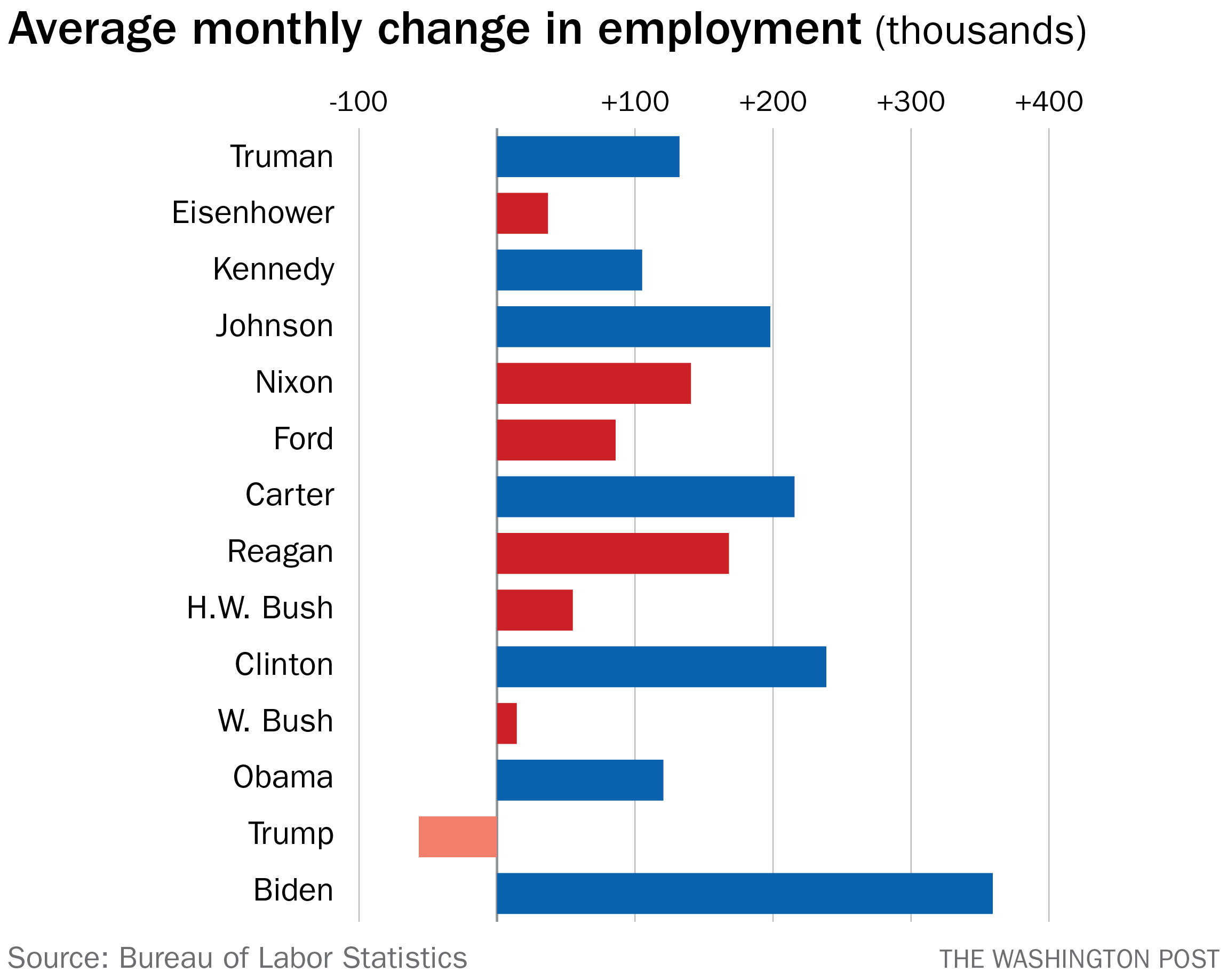
Tangentially related, the Trump admin has decreased the number of refugees that America will legally accept this year from 125k to 7,500. The new quota will prioritize white Afrikaners from South Africa, whom Trump claims face extraordinary discrimination.
Trump is up to ~3 million deportations now, while Obama did 3.1 million throughout his entire presidency. Obama's peak was 409k in 2012. Trump's peak was 605k in 2025. Unless this "concerted campaign" (i.e. broad based American public pressure) succeeds in changing Trump's strategy or reducing his power, he'll be well ahead of Obama before the midterms in 2026, let alone before the end of his presidency.
Once they chew through the undocumented people in America, I wonder where the DHS is going to find the other 80 or 90 million people to deport?
The DHS post I linked says "America After 100 Million Deportations". If you assume there are 20 million people who entered the US illegally (which I believe is a substantial over-estimate), then that means they need to find another 80 million people to deport to meet that ridiculous goal. Who will those people be?
>a majority of people still favor deportation of those who entered the IS illegally regardless of other criminal acts.
I'm not so sure about this. I think it depends on whose polls you believe. Here's one from Fox News from July of 2025 (before the absolute SNAFU in Minneapolis) which claims:
>The latest Fox News survey, released Monday, finds 3 in 10 back deporting all illegal immigrants, while 6 in 10 supports only deporting those charged with crimes but would allow others to stay and apply for citizenship. One in 10 favors letting all illegal immigrants remain in the U.S.
I said 30m is the most bloated of estimates... the 20m often cited is just under the Biden administration, I'm considering all living illegal aliens in the country.
In any case, I'm not a fan of creating a quasi-slave class out of illegal immigration. I think there should be stiff penalties that actually start to get applied to employers. I think it's fine to have demand based immigration, most people that can pass a security check and have a place to go should be allowed in.
However, that should be offset by a few restrictions... first, no social welfare benefits from taxpayer funds, or orgs that receive taxpayer funding. Second, pay floors based on job class. H1B should get paid at least $50/hr and farm workers at least $20/hr imo. I also think there should be a 100% employer paid tax that is used to fund education grants for STEM and vocational programs in the US. The pay floors and tax on imported labor are expressly to secure the future of citizens and act as a ballast against excess immigration to the detriment of existing citizens and working resident aliens.
I also think that you should have 10 years to assimilate and apply for citizenship... this should include learning the English language or ASL/braille if you are deaf. Citizenship testing should be in English or ASL/braille without benefit of a translator. I also think we need to eliminate birthright citizenship, that I don't believe the implementors meant for it to be interpreted nearly as broadly as it is currently applied.
I consider my takes above to be pretty reasonable... that said, I do feel that anyone who entered illegally and especially those in the country for decades without assimilating by learning the language well enough to communicate or to even attempt at becoming a legal resident should be deported. Not just those who commit felonies. While I'm pretty libertarian in most of my views, I think borders and national identity are important and both have been diluted for generations. Even if the "rah rah 'merica!" position was mostly propaganda, I feel it was largely beneficial to the nation as a whole.
More interesting to me is the "derivative work" concept. If a human sits down with a novel, reads it cover to cover, then writes their own novel which broadly has the same characters following the same plot in the same setting, but with slight differences in names and word choice, is that new work a derivative of the first for copyright purposes? What if they do the same thing for code? What if an AI does either or both of those?
IP courts will have some truly novel questions before them this century.
Copyright does not cover ideas, period. If you write your own novel and use your own word choices, even if you copy the plot structure exactly and the same character names while writing a new book, it’s not even considered a derivative work under the law, it’s a new work. Copyright covers copying the fixed work itself. You aren’t in violation of copyright unless you copy the words themselves.
The flip side is that this is why the article’s discussion about randomness and monkeys on typewriters is irrelevant to copyright law. It’s a copyright violation to produce the same “fixation” no matter how you do it. If you generated a random sequence of characters, and it happened to match a NYT best selling book, you violate the book author’s copyrights, and claiming it was random isn’t a viable defense. Intent to copy can make it worse, but lack of intent does not absolve. There is precedent for people coming up independently with the same songs and one being successfully sued.
Do note that there are other laws that might cover plagiarism of ideas, trademarks, code, etc., copyright isn’t the only consideration, but copyright seems to be often misunderstood. We definitely have some novel questions because of the scale of AI’s copying, the nature of training and the provenance of the training data, and because of AI’s growing ability to skirt copyright law while actually copying.
That's not really true. Copyright protects named characters if they are sufficiently distinctive, though there's nothing to stop you from creating an identical character with a different name.
It is really true, but yes there are some specific exceptions. In general: “Copyright protection does not extend to names, titles, short phrases, ideas, methods, facts, or systems.” https://www.copyright.gov/engage/writers/
You’re right that in certain limited circumstances, copyright will protect fictional characters. To protect a character, the character must be “well delineated”, and this has proven to be a pretty high bar. https://en.wikipedia.org/wiki/Copyright_protection_for_ficti...
You still seem to be ignoring derived works a bit. For example, if I downloaded a copy of "Harry Potter" and replaced every "Harry" with "Harvey" and every "Potter" with "Plumber", my new book "Harvey Plumber" would be a derived work from the original, meaning I would not have the right to sell or distribute the new work, even though it wouldn't be exactly the same.
What if I did something similar, but rather than a simple Ctrl-H replacement, I asked an LLM to rewrite each paragraph in different words? What if I did the rewrite myself, by hand? Is there a difference? If so, why? If not, why not?
The right to make derived works is covered by copyright law. It’s not legal to play madlibs on something and call it a derived work unless you already have the copyrights. If the edit distance is too small, proving infringement isn’t hard. If you change more words, you’re still in violation of copyright on originality grounds, but it might be harder for someone to prove it.
The LLMs question is more complicated. If you ask AI for a rewrite of a specific work, that’s infringement on grounds of originality. It’s also infringement when you don’t have the rights to the work that you feed to the LLM. This is part of the debate over AI training, and is covered in the Copyright Office’s draft on generative AI under the Prima Facie Infringement section https://www.copyright.gov/ai/Copyright-and-Artificial-Intell...
AI companies aren’t arguing over derived works, they are trying to get approval to classify AI training as Fair Use, because they know they are infringing existing copyright law. The Copyright Office might end up allowing it and changing the law.


reply